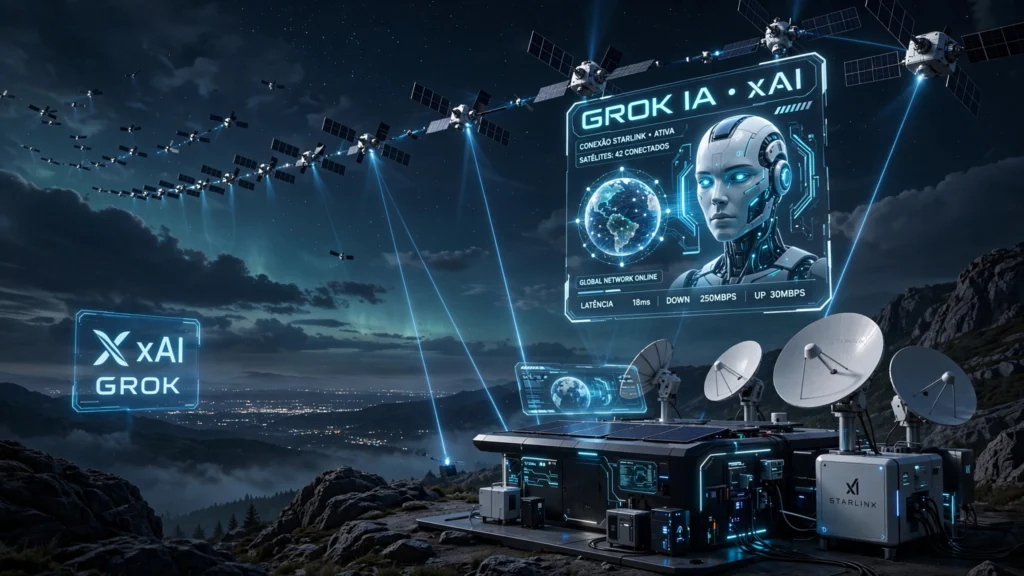
If you want to start an affiliate blog in 2026 and you’re still hunting for “the right niche,” stop looking. It’s already right in front of you, and it’s called Starlink, Grok, and Starship — the three Elon Musk projects that, together, form the most talked-about tech ecosystem of the year. Satellite internet, conversational AI, and space travel aren’t science-fiction topics anymore: they’re real products, with millions of monthly searches, high organic traffic potential, and — most importantly — real affiliate monetization potential.
This article is built for anyone who wants to catch this wave right now — before the niche gets saturated — and build a blog with real authority, using the latest SEO rules, GEO best practices (Generative Engine Optimization, i.e., optimizing for AI systems like Grok itself, ChatGPT, and Google’s AI Overviews), and a tested list of keywords to start ranking in 2026.
Why 2026 Is the Right Moment for This Niche
Three trends are converging at the same time, and that convergence is exactly what creates the opportunity:
1. Starlink is in full commercial expansion. SpaceX has confirmed progress on its next-generation V3 satellites, with up to ten times the current capacity, alongside the rollout of its direct-to-cell service (now rebranded as <cite index=”6-1″>Starlink Mobile</cite>), which connects phones directly to satellites with no need for external antennas. The company <cite index=”4-1″>is aiming to close out 2026 with more than 25 million active monthly users</cite> on its satellite connectivity mobile service. That’s a massive audience actively searching for practical information: plans, pricing, phone compatibility, installation, comparisons with cable internet.
2. Grok and xAI are shipping at a relentless pace. After Grok 4, xAI has already moved on to even more capable models — <cite index=”11-1″>Grok 4.3, released in April 2026, introduced a 1-million-token context window, a 58% price cut, and native video input support</cite> — and reports point to an even larger 2-trillion-parameter model wrapping up training, with a possible release as early as August 2026. Every update triggers a fresh wave of searches: “how to use it,” “is it better than ChatGPT,” “is it worth subscribing.”
3. Starship is back in the headlines. After delays and turbulent tests in 2025, SpaceX keeps pushing its flight schedule toward Elon Musk’s stated goal of a Mars-bound mission, aiming to send Starship carrying the Optimus robot by the end of the year. Every new test flight becomes international news — and generates unpredictable but massive traffic spikes for anyone who already has content published on the topic.
In other words: you’re not building content around just any topic. You’re tapping into three simultaneous search waves, all tied to the most talked-about name in tech today, and all backed by real products to promote as an affiliate — Starlink kits, AI courses and subscriptions, licensed merchandise, books, documentaries, rocket replicas, and much more.
Turning These Three Topics Into One Blog
Instead of building three separate blogs, the most efficient strategy in 2026 is to build one umbrella blog around “the future of tech with Elon Musk” or “space tech and applied AI,” organized around three content pillars:
- Pillar 1 — Starlink and satellite internet (evergreen content + news)
- Pillar 2 — Grok and xAI’s artificial intelligence (tutorials and comparisons)
- Pillar 3 — Starship and space exploration (news and curiosity-driven content)
This “silo” or “topic cluster” structure is exactly what Google recommends today for ranking well: a central pillar page for each theme, internally linked to more specific supporting articles. This helps both Google and AI-powered search engines quickly understand what your blog is an authority on.
Pillar 1: Starlink — The Commercial Traffic Magnet
Starlink is the pillar with the highest purchase intent, which makes it perfect for affiliates. People don’t search for Starlink out of curiosity — they search because they’re about to buy.
High-commercial-potential article ideas:
- “Starlink Kit: Which One to Buy in 2026 (Standard, Mini, or RV)”
- “Is Starlink Worth It? Updated Price, Speed, and Coverage”
- “Starlink Mobile: How Direct-to-Cell Works and Which Phones Are Compatible”
- “Starlink for Rural Areas: The Complete Installation Guide”
- “Best Starlink Accessories (Mounts, Battery Packs, Routers)”
Monetization opportunity: programs like Amazon Associates let you promote antennas, mounts, cables, backup power supplies, and compatible routers — physical products with a high average order value and strong commissions during sales spikes.
Pillar 2: Grok and xAI — The Authority and Engagement Magnet
While Starlink drives commercial traffic, content about Grok drives authority and engagement, because it’s a topic that changes weekly — and fresh, updated content is what generates recurring clicks and backlinks from other sites.
Article ideas:
- “Grok 4.3 vs ChatGPT vs Claude: Which AI Is Worth Subscribing to in 2026”
- “How to Use Grok Imagine to Create AI Videos”
- “Grok in Tesla: How to Activate and Use It by Voice Command”
- “xAI Announces New Model: What Changes for Grok Users”
- “Grok API: Pricing and How to Integrate It Into Your Business”
Monetization opportunity: prompt-engineering courses, AI tool subscriptions with affiliate programs, automation plugins and templates, hosting services for people building AI-powered bots.
Pillar 3: Starship — The Viral Traffic Magnet
Starship content is what goes most viral on social media and in Google Discover, because every launch is a visual, emotional event. It’s the ideal pillar for generating traffic spikes and funneling new visitors into your other two pillars.
Article ideas:
- “Starship: When’s the Next Launch and How to Watch It Live”
- “Starship to Mars: SpaceX’s Official 2026 Timeline”
- “What Is Starship 3 and Why It’s Different from Earlier Versions”
- “Optimus on Starship: Elon Musk’s Plan for Mars Explained”
Monetization opportunity: books on space exploration, rocket replicas and miniatures, documentaries, telescopes, licensed SpaceX merchandise (where available through marketplaces).
SEO in 2026: What Actually Changed (and What to Prioritize)
SEO rules have evolved significantly over the past few years, and anyone creating content now needs to follow a few non-negotiable points:
1. E-E-A-T is still the central ranking factor. Google evaluates Experience, Expertise, Authoritativeness, and Trustworthiness. That means: have a complete “About” page, with a real author name, photo, and a clear explanation of why that content is trustworthy. Anonymous, generic sites tend to lose ranking to competitors with clear authorship.
2. Original, verifiable content beats generic content. Rewriting what already exists isn’t enough. Add updated data, your own comparisons, screenshots, price tables — something no other article has.
3. Silo structure with internal linking. Every supporting article should link back to the pillar page for that topic, and the pillar page should link out to all its supporting articles. This reinforces topical relevance.
4. Core Web Vitals and load speed still carry weight in rankings, especially on mobile — most of the traffic around Starlink and Starship comes from mobile searches during live launches.
5. Structured data (Schema Markup). Use FAQ, Article, and Product markup wherever possible. This increases your chances of appearing in rich snippets and, crucially, of being cited by generative AI — which brings us to the next point.
GEO: Optimizing to Get Cited by AI (Google AI Overviews, ChatGPT, Grok, Perplexity)
In 2026, a growing share of searches don’t end in a click — they end in an AI-generated answer. That’s where GEO (Generative Engine Optimization) comes in: the set of practices that get your content chosen as a source by these tools.
Key GEO practices to apply to your blog:
- Answer the question in the first paragraph. Generative AI tools tend to extract the direct answer right at the start of the text, not buried in the middle or at the end.
- Use a question-and-answer (FAQ) format throughout your articles. Questions like “Does Starlink work anywhere in the country?” followed by a direct 2–3 sentence answer are the most frequently cited by AI tools.
- Cite sources and concrete data. Numbers, dates, and specific comparisons (e.g., speed in Mbps, price in dollars) increase your citation chances, because AI models prefer verifiable content over vague opinion.
- Write self-contained paragraphs. Every paragraph should make sense even if pulled out on its own — that’s how AI models “extract” content to build their answers.
- Update content frequently and make that visible (a “last updated” date at the top of the article). Topics like Grok and Starship change weekly, and outdated content gets discarded quickly by AI models.
- Clearly mark authorship and the original source of your data. This helps both with Google’s E-E-A-T and with the trust AI models assign to your content.
Keywords to Start Ranking (Organized by Search Intent)
Organize your keyword research by search intent — commercial, informational, and news — so you know what type of content to produce first.
Commercial keywords (Starlink) — highest priority for affiliates:
- Starlink kit price
- is Starlink worth it 2026
- Starlink Mini vs Standard
- Starlink rural internet
- where to buy Starlink antenna
- how does Starlink Mobile work
- best Starlink plan
Informational keywords (Grok / xAI):
- what is Grok
- Grok 4.3 new features
- Grok vs ChatGPT
- how to use Grok Imagine
- Grok Tesla voice command
- xAI new model 2026
- Grok API pricing
News and long-tail keywords (Starship):
- Starship next launch
- Starship 2026 Mars
- when is Starship going to Mars
- Starship 3 what’s new
- watch Starship launch live
- Optimus Starship Mars
Long-tail keywords combining all three topics (great for GEO content):
- Elon Musk tech 2026
- SpaceX and xAI projects 2026
- future of internet and AI with Elon Musk
- Starlink Grok Starship news
Prioritize commercial Starlink keywords first (easiest to monetize), then informational Grok keywords (easier to rank for since they’re less competitive), and use Starship keywords as viral traffic bait.
How to Monetize the Blog as an Affiliate
Once your three content pillars are published and indexed, several monetization streams can work together:
- Amazon Associates — for physical products: Starlink kits, mounts, routers, backup power supplies, space books, rocket replicas.
- AI SaaS affiliate programs — many automation, prompt-engineering, and AI productivity tools pay recurring commissions on subscriptions.
- Google AdSense or Ezoic/Mediavine — once your blog reaches meaningful traffic volume, programmatic advertising becomes a second passive income stream.
- Your own digital products — ebooks, checklists, and mini-courses teaching people how to set up Starlink, use Grok for productivity, or follow SpaceX launches are easy to create and carry high margins.
- Email list — capture emails starting with your very first published article. A “weekly SpaceX and xAI updates” newsletter is a natural lead magnet for this niche, and lets you re-engage your audience with every new launch or model release.
Quick Checklist to Launch Your Blog in This Niche
- Pick a short, memorable domain tied to the theme (e.g., futuretechhub, spacewaveblog, aiandrockets).
- Install WordPress with a lightweight, fast-loading theme.
- Build the three pillar pages (Starlink, Grok, Starship).
- Publish 3 to 5 supporting articles per pillar, using the keywords listed above.
- Add FAQ structured data to every article.
- Sign up for Amazon Associates and at least two AI-tool affiliate programs.
- Set up an email list with a lead magnet (a checklist, guide, or launch-alert newsletter).
- Publish new content every week — this niche is extremely sensitive to freshness.
- Monitor Core Web Vitals and load speed monthly.
- Review each pillar’s performance month over month and double down on what’s driving the most traffic and conversions.
Final Thoughts
Starlink, Grok, and Starship aren’t just passing news stories — they’re three products with confirmed roadmaps stretching into 2027 and 2028, which gives any blog starting today a guaranteed content horizon of at least two years. The combination of high commercial intent (Starlink), high update frequency (Grok), and high viral potential (Starship) is rare: most niches only have one of these traits, not all three at once.
Anyone who starts now, structures their blog around topic silos, applies the SEO and GEO best practices outlined above, and monetizes through affiliates from month one, has a real window to grow alongside this trend — before it gets flooded with competitors copying the same generic content.
This article is for informational and strategic purposes for content creation. Prices, technical specs, and launch dates change frequently — always verify against official SpaceX, Starlink, and xAI sources before publishing specific data on your blog.
Broadband internet where fiber never reached.
The Starlink Gen-3 Standard Kit connects your home directly to satellites in orbit — no cables running down your street, no waiting on your local provider. Built for rural areas, remote homes, and anywhere fiber simply isn’t an option.
See it on Amazon →This is an affiliate link — buying through it supports this guide at no extra cost to you. Frequently asked questions ↓
25–45 ms
up to 220 Mbps
9,000+ in orbit
~15 minutes
Built for anyone living beyond fiber’s reach
The Gen-3 system was designed to solve exactly the problem traditional cable internet can’t: reaching remote areas with a stable connection.
Fast, reliable broadband
Connects directly to satellites in orbit, even in rural or remote areas where cable and fiber simply aren’t available.
Genuinely low latency
Significantly lower latency than traditional satellite internet — smooth video calls, streaming, and online gaming with barely noticeable lag.
Everything you need to start
Gen-3 dish, Wi-Fi router, power supply, mounting base, and cables — no extra purchases required.
Built for the outdoors
Durable components rated for rain, wind, snow, and extreme temperature swings, for reliable outdoor deployment.
In the box
Gen-3 satellite dish (Starlink terminal)
Sends and receives signal directly to and from satellites in orbit.
Tri-band Wi-Fi router
802.11a compatible, built to handle consoles, computers, and phones connected at once.
Power supply
Dedicated power for the terminal and router.
Mounting base / stand
Positions the dish with a clear, unobstructed view of the sky.
Connection cables
Everything you need for a fast setup, with nothing else to buy.
Standard Kit specifications
Up and running in 3 steps
Position the dish
Pick a spot with a clear view of the sky — rooftop, yard, or balcony.
Connect the cables
Link the dish to the router and power supply — everything’s already included in the kit.
Follow the app
The Starlink app walks you through setup step by step, usually connecting within minutes.
Standard or Mini?
If you need fixed coverage at home, the Standard kit is the sturdier choice. If you’re after portability — RV, cabin, or occasional use — the Mini is more compact.
Standard Kit
BEST FOR HOMEStronger performance in fixed setups, better resistance to outdoor conditions, and longer signal range.
See Standard Kit →Mini Kit
More compact and portable, ideal for frequent travel or occasional internet needs.
See Mini Kit →Before you buy
Does it work in any rural area?
The system needs a clear, unobstructed view of the sky to reach satellites in orbit. Beyond that, it works in virtually any location — that’s the core advantage over cable or fiber internet, which depends on local infrastructure.
Do I need a technician to install it?
No. The kit is designed for self-installation: position the dish, connect the included cables, and follow the app’s instructions. Most users are online in about 15 minutes.
Can it handle harsh weather?
Yes. The components are built to withstand rain, wind, snow, and extreme temperatures, so it keeps working through continuous outdoor use.
How is it different from the Mini Kit?
The Standard kit has a longer signal range and is better suited for fixed home use. The Mini is smaller and portable, built for people who need to bring their internet with them — RVs, camping, or vacation homes.
Does the listing include shipping costs?
Pricing, shipping costs, and availability are set by Amazon and can change at any time. Always check the current details on the product page before completing your purchase.
Ready to leave fiber dependency behind?
The Starlink Gen-3 Standard Kit is available now on Amazon, with shipping subject to availability by location.
See it on Amazon →
# Checklist IA
En los últimos años, la tecnología ha dado un enorme salto. La inteligencia artificial ha dejado de ser algo de películas para convertirse en parte de nuestra vida diaria: en el trabajo, en los negocios e incluso en las tareas más simples.
Pensando en ello, creamos Checklist IA.
Queremos ofrecer un espacio sencillo y práctico donde cualquier persona pueda aprender sobre inteligencia artificial, automatización y tecnología, incluso sin experiencia técnica.
Creemos que la IA no tiene por qué ser complicada. Existe para facilitar la vida, ahorrar tiempo y hacer que los procesos sean más inteligentes y eficientes.